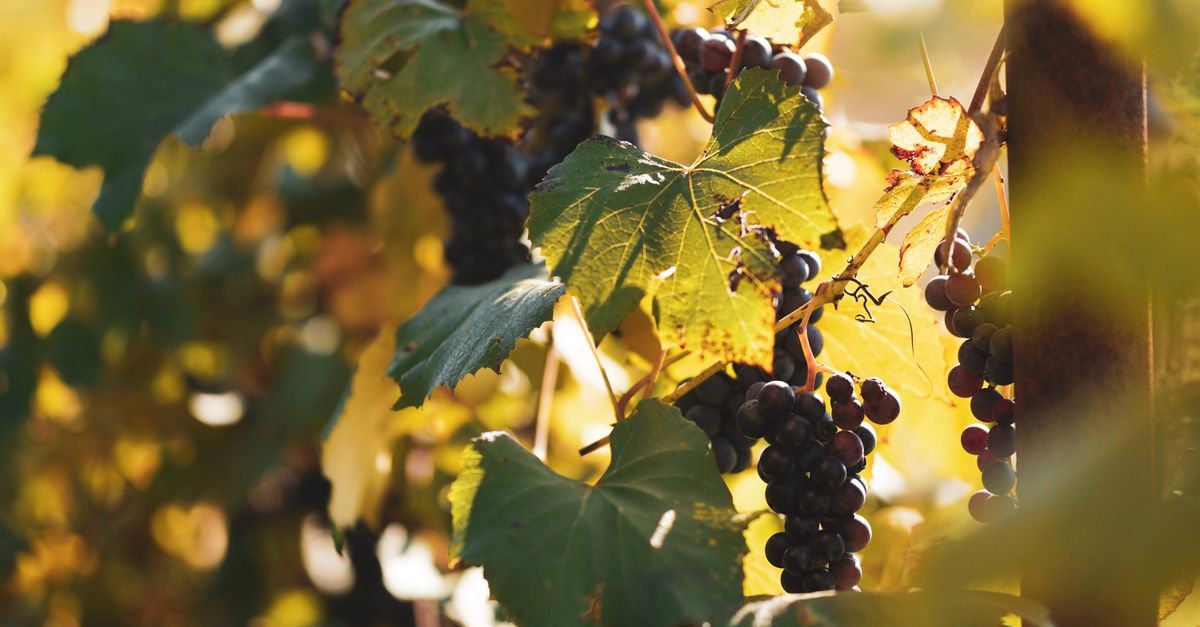
Champagne's 2026 Harvest Is Its Healthiest in 50 Years
Fifty years is a long time to wait for a vintage like this.
The Drinks Business reported on August 28 that Champagne's 2026 harvest is being called the healthiest the region has seen since the mid-1970s. Grapes came in early, disease pressure was low, and the yields look strong. For a region that spent much of the last decade dealing with spring frosts, mildew, and the kind of erratic weather that turns winemakers into meteorologists, this is a rare bit of straightforward good news.
So what does it actually mean if you're someone in the UK who loves Champagne but isn't in the trade?
Quite a lot, as it turns out.
Why This Harvest Stands Out
Champagne has had some good years recently. The 2018 vintage gets talked about a lot, and 2019 is generally well-regarded. But "healthy" in 2026 means something slightly different to quality alone. The reports coming out of the region point to uniformly ripe grapes across the main varieties: Chardonnay, Pinot Noir, and Pinot Meunier. No significant botrytis. Low rot. The kind of harvest where growers aren't making frantic decisions about when to pick before the weather turns.
That uniformity matters for Champagne more than most regions, because a huge proportion of what gets made is non-vintage: blended across multiple years to hit a consistent house style. When the base wine from a single year is this clean and this ripe, it gives the blender something genuinely useful to work with, whether that's bottling a prestige cuvee down the line or strengthening the reserve wine stocks that underpin the NV blends you'll drink in 2028 and 2029.
The 2026 base wines won't appear on shelves as vintage Champagne for at least three years. Non-vintage requires 15 months on lees; vintage needs a minimum of three years. So if you're hoping to buy a bottle of 2026 vintage Champagne for Christmas this year, that's not how this works.
But the ripple effects start sooner.
What It Means for the Wine You'll Actually Drink
The reserve wine stocks that top producers and co-operatives hold are partly what determines how good their NV blends taste right now. A difficult year (2021 was rough in parts of the region, and 2024 had its own frost problems) depletes those stocks and forces compromises. A year like 2026 does the opposite. It gives houses something to bank.
That might translate into marginally better NV Champagne on the market over the next two to four years, though I'd be cautious about expecting dramatic price drops. Champagne pricing has a lot more to do with brand positioning and input costs than with a single good harvest. The big houses won't suddenly cut the price of their Brut NV because the 2026 base wine was clean.
Where you might genuinely notice a difference is with grower Champagnes, which are worth your attention anyway. Growers who make single-village or single-parcel wines from one year's harvest are more directly exposed to vintage variation, and a harvest this healthy gives them real material to work with. If you've been curious about trying a grower producer but always defaulted to the big names, the 2026 vintage Champagnes (when they eventually arrive, probably around 2029 or 2030) could be a good entry point.
A Note on How to Find These Wines
Grower Champagnes are genuinely harder to find than they should be. Your local supermarket almost certainly doesn't stock them. The places that do tend to be independent wine merchants, importers who specialise in small French producers, or bottle shops that actually care about what they're selling.
One of the better ways to get across these wines quickly, without buying blind, is to find a tasting or a masterclass. A lot of independent wine educators and bottle shops run Champagne and sparkling wine events, especially in the run-up to autumn and the Christmas buying season. Sommly lists those kinds of events across the UK, so if you want to try a few grower Champagnes before committing to a case (or even a bottle), that's a reasonable place to look.
The Bigger Picture for English Sparkling Wine
This is worth mentioning, because the 2026 harvest story isn't only a Champagne story. Harpers reported on August 24 that Rathfinny Estate in Sussex is also forecasting an excellent 2026 vintage, with high yields and healthy fruit. The English sparkling wine industry has had its own run of tricky years, and back-to-back good news from both sides of the Channel in the same harvest is the kind of thing that doesn't happen all that often.
I'll be honest: I think English sparkling wine is more interesting right now than its UK market share suggests. Producers like Rathfinny, Wiston Estate, and Gusbourne are making wines that hold up against decent grower Champagne on any blind tasting I've seen reported. The 2026 vintage, if it delivers on early signs, could be another good argument for that case.
The gap between the two regions is closing. I don't know by how much, and I'm probably not the right person to judge the chemistry, but the trajectory feels real.
What to Do With This Information
A few practical things worth taking away from all this.
If you have any existing Champagne in your rack that you're saving for a special occasion, the 2026 vintage news doesn't change what you already own. Drink what you've got when you want to drink it.
If you're planning to buy Champagne in the next year or two, the NV releases from houses with strong reserve stocks are worth paying attention to. Producers like Billecart-Salmon, Egly-Ouriet, and Pierre Peters manage their reserves carefully and the quality does track with harvest conditions over time.
And if you've never tried a grower Champagne, look for one from a village you've never heard of. The difference between a generic NV and something like a blanc de blancs from Le Mesnil-sur-Oger or a Pinot Noir-driven wine from Ambonnay is genuinely worth the detour.
The 2026 vintage Champagnes are years away. But the conversation about what they might become is starting now, and that's actually a good time to pay attention, before the hype sets in and the prices follow.