Section 2 of 9
Growing grapes
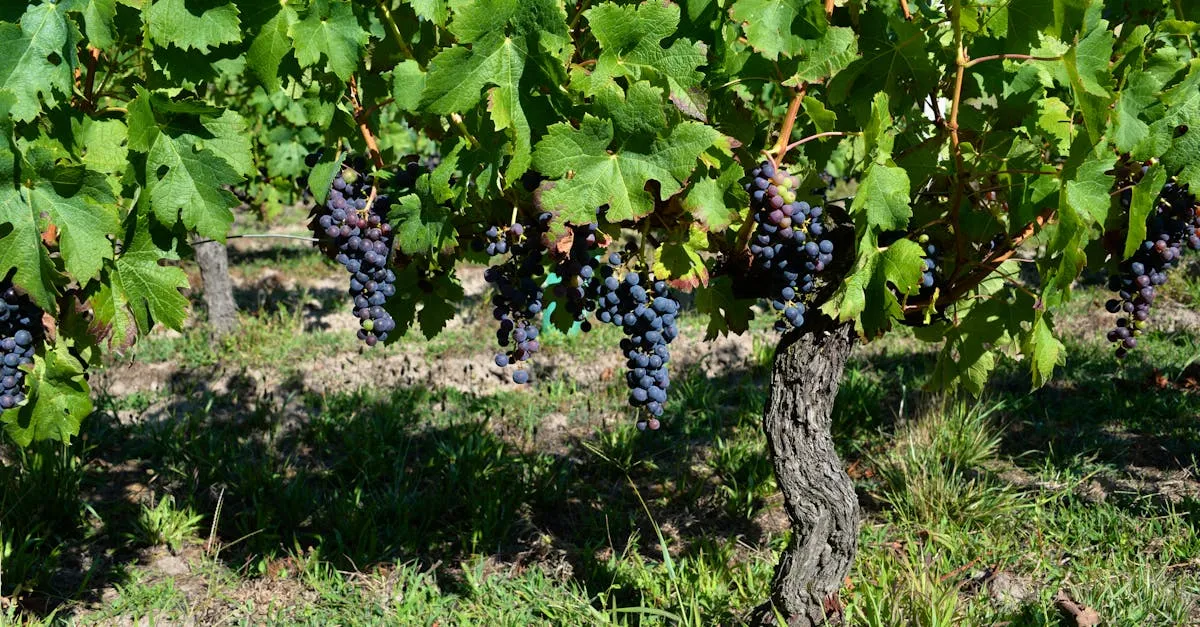
Once you know wine is fermented grape juice, the next question is where the grapes come from. This chapter covers the annual vineyard cycle, the changes that happen as a grape ripens, and the climate bands where vines can actually produce wine worth drinking.
By the end of this chapter you will be able to:
- Describe the annual growth cycle of a grape vine.
- List the key changes that happen to grapes during ripening.
- Identify the latitude bands where grapes are most commonly grown.
- Compare cool and warm climate regions and the grapes they favour.
- Explain how climate shapes the sugar, acid, and flavour of the finished grape.
The vineyard year
A grape vine lives for several decades. Once planted, it takes a couple of years before it produces its first usable crop, and from then on it yields grapes every year on roughly the same schedule.
The cycle is simple and you should know it in order:
- Spring: the vine flowers. Each flower on the cluster will become one grape.
- Early summer: the flowers set into small, hard, green grapes.
- Summer: the grapes ripen.
- Late summer: the grapes are picked.
What ripening actually changes
As grapes ripen, sugar rises and acid falls. That one sentence is the most exam-tested idea in the chapter. The full list of ripening changes is worth remembering in order.
- The grapes swell with water.
- Sugar levels rise.
- Acid levels fall.
- Flavours become riper.
- White grapes turn from green to golden.
- Black grapes turn from green to purple.
Where grapes grow
Vines need a specific balance of sunlight, heat, and water. Too cold and the grapes never ripen. Too hot and they lose acidity and character. Vines also need a cold enough winter to rest.
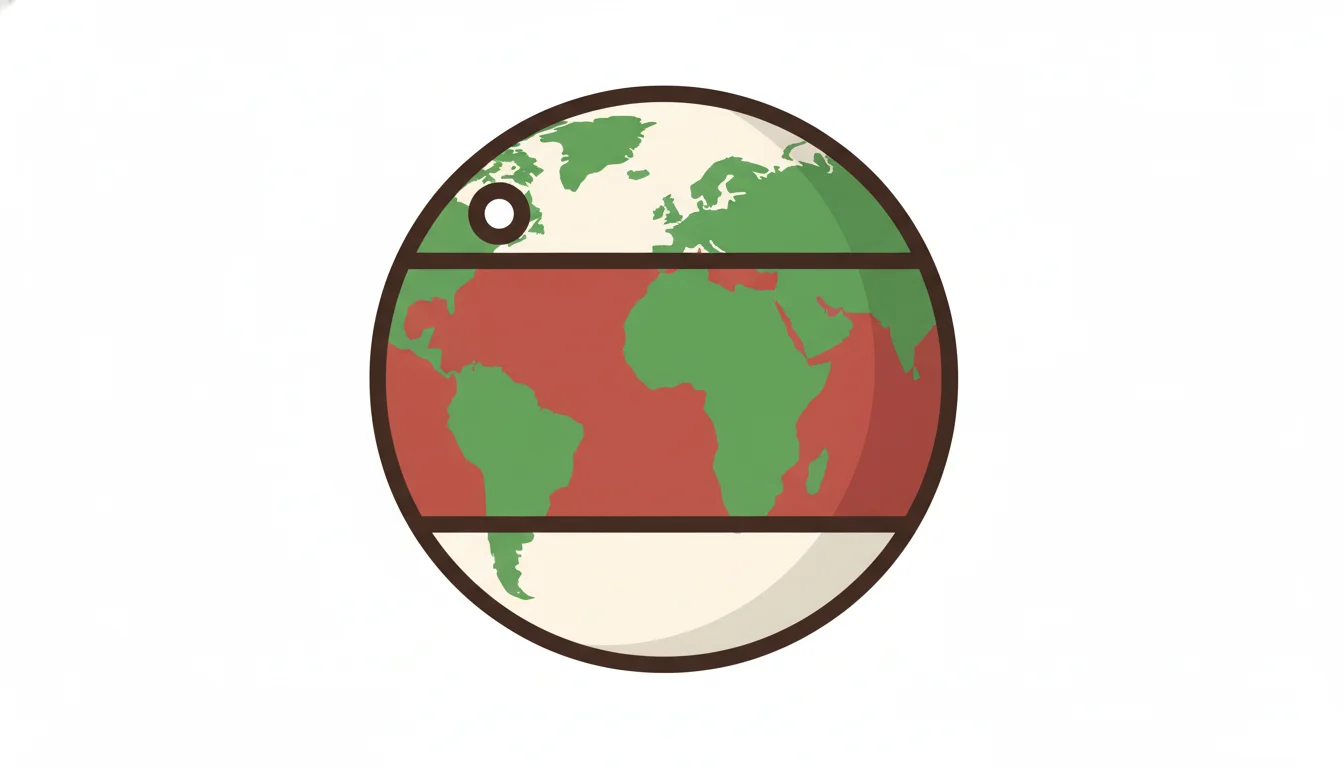
Most grapes are grown between 30 and 50 degrees latitude in both the northern and southern hemispheres. These two bands are sometimes called the wine belts. Inside them, climate, soil, and tradition decide which grapes actually get planted.
Cool climates and warm climates
- Cool climate
- A region closer to the poles. Average temperatures are low, sunlight can be weaker, and grapes sometimes struggle to ripen fully. Examples: Germany, northern France.
- Warm climate
- A region closer to the Equator. Average temperatures are high, sunlight is more intense, and grapes ripen consistently year after year. Examples: parts of Australia, parts of California.
Cool climate regions favour white grapes. Warm climate regions favour black grapes. That pairing is a common multiple-choice stem, so hold on to it.
How climate shapes the grape
Climate decides more than which grapes grow. It reaches into the fruit itself and changes the numbers on every line of the finished wine.
- Cold climate: lower sugar, higher acidity, less ripe flavours.
- Warm climate: higher sugar, lower acidity, riper flavours.
Sugar matters because yeast will eventually turn it into alcohol, as you met in Chapter 1. A warmer climate therefore tends to produce wines with more potential alcohol. Acidity matters because it gives a wine its freshness and its ability to age.
Chapter summary
- Vines flower in spring, set fruit in early summer, ripen through summer, and are picked in late summer.
- As grapes ripen, sugar rises, acid falls, water content rises, flavours ripen, and skin colour shifts from green to golden or purple.
- Grapes grow best between 30 and 50 degrees latitude in each hemisphere.
- Cool climates favour white grapes; warm climates favour black grapes.
- Cold climate grapes have lower sugar and higher acid; warm climate grapes have higher sugar and lower acid.
The vineyard sets up everything the winemaker can do next. Run the Growing Grapes deck now to lock in the ripening sequence and the climate pairings, then continue to Chapter 3.
✓
Test yourself to continue
Growing grapes