Section 24 of 34
Gamay
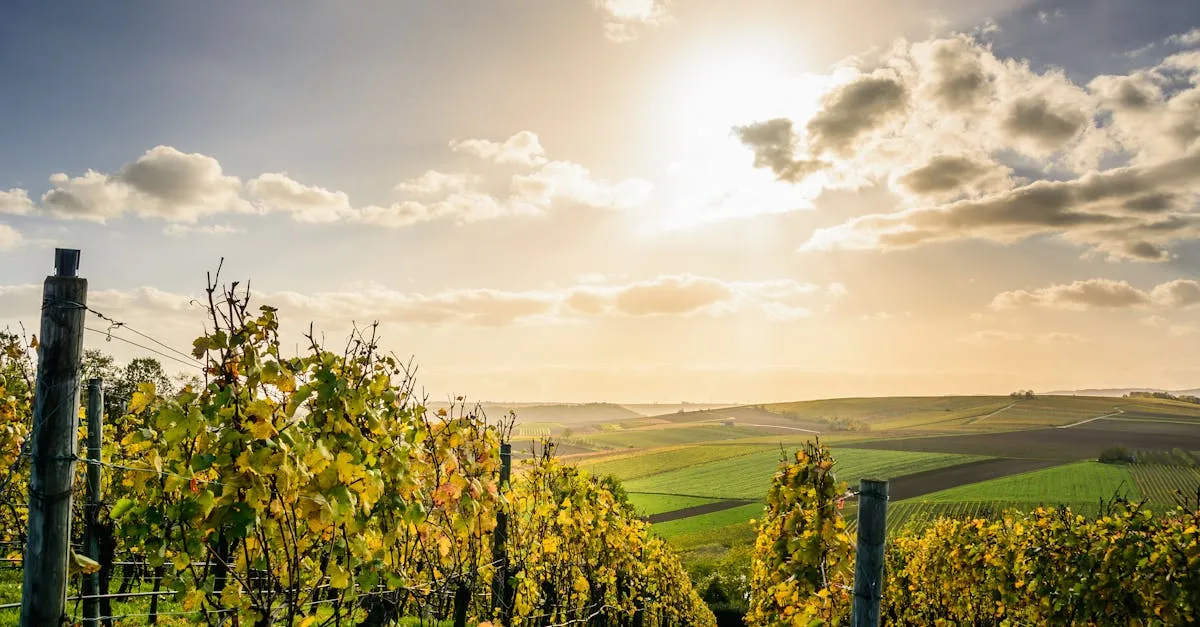
Gamay is an unusual grape because it has achieved global popularity despite being almost entirely grown in one region: Beaujolais. Light, fresh, low-tannin, high-acid red wine for drinking young - often served slightly chilled. The winemaking techniques used here explain the banana-and-candy aromas that are Beaujolais' calling card.
By the end of this section you will be able to:
- Describe Gamay's structural profile and typical flavour signature.
- Explain how carbonic maceration in Beaujolais produces banana and candy aromas.
- Read the Beaujolais appellation hierarchy: Beaujolais AOC, Beaujolais Villages AOC, Beaujolais Crus.
The grape
Gamay is a black grape that produces wines with high acidity, low to medium tannins, and red-fruit flavours (raspberry, red cherry, red plum). Wines are usually produced in inert vessels and rarely display aromas from oak.
France: Beaujolais
The most important region for Gamay is Beaujolais, a moderate-climate region directly south of Burgundy in France. Winemakers here commonly use a technique called carbonic maceration - whole, uncrushed grapes are sealed in a tank filled with carbon dioxide, so fermentation begins inside each berry before the skins are broken. This maximises colour extraction while minimising tannin extraction and produces the distinctive aromas of banana and candy that are Beaujolais' calling card. Semi-carbonic maceration - where some grapes are crushed at the bottom of the tank - is a common variant.
A typical Beaujolais is light-bodied with low to medium tannins and red-fruit flavours. Wines from the cru appellations are the most concentrated and structured. Very good examples typically have medium to pronounced red-fruit aromas (red cherry, raspberry, red plum) and a medium to long finish.
Beaujolais wines are sometimes served lightly chilled to highlight their refreshing acidity and preserve their delicate fruit. Most are intended for immediate consumption and quickly lose their fresh fruit flavours over time in bottle.
The Beaujolais hierarchy
- Beaujolais AOC
- The base appellation. Grapes can be grown anywhere in the Beaujolais region but mostly come from the flat, fertile vineyards to the south. High-yielding vines here produce the lightest-bodied and simplest wines of Beaujolais.
- Beaujolais Villages AOC
- A collection of villages in the north of the region. Less fertile, stonier soils act as a natural yield control. These wines typically offer greater flavour intensity and body than basic Beaujolais.
- Beaujolais Crus
- Ten villages within the Beaujolais Villages area have been awarded their own appellations: the "crus". Fleurie AOC is one of the best known. While most Beaujolais is still intended for early drinking, some of the cru wines can develop in bottle.
Section summary
- Black grape, high acidity, low to medium tannins, red fruit (raspberry, red cherry, red plum).
- Inert vessels, rarely oaked.
- Beaujolais is the dominant region: moderate climate, south of Burgundy.
- Carbonic maceration (fermentation inside whole berries under CO₂) maximises colour and minimises tannin extraction - signature banana and candy aromas.
- Drunk young, often lightly chilled.
- Hierarchy: Beaujolais AOC (southern, flat, lightest) → Beaujolais Villages AOC (northern, stonier, more intense) → Beaujolais Crus (10 named appellations e.g. Fleurie, some can develop in bottle).
Next up is Grenache, a warm-climate grape with two names and two famous regions.
✓
Test yourself to continue
Gamay