Section 5 of 34
Red production factors
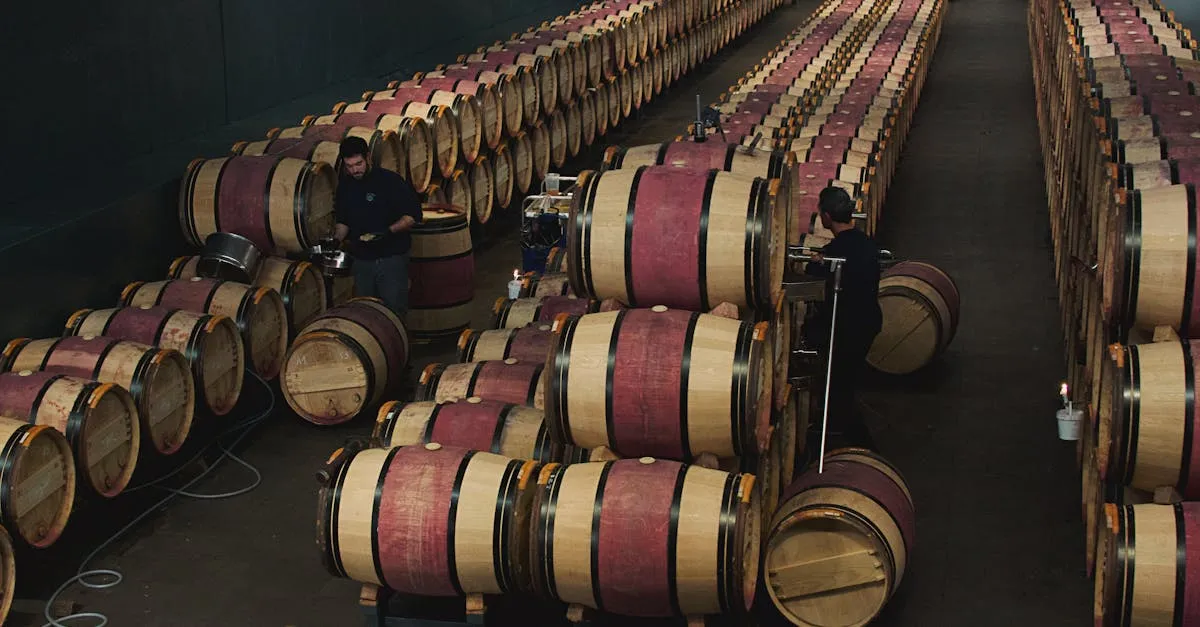
Red wines are made from black grapes with their skins included in the fermentation. The skins carry the colour and tannins that define a red wine, and almost every production decision in this chapter is about how much of each gets into the finished bottle.
By the end of this section you will be able to:
- List the typical order of red winemaking steps.
- Explain how colour and tannin are extracted from the cap.
- Compare punching down and pumping over.
- Compare stainless steel and concrete vessels with oak vessels for red winemaking.
- Describe what oak vessels add to a wine and why new-oak barrels behave differently from old-oak barrels.
- Explain why bottle ageing only suits a small subset of wines.
The order of red winemaking
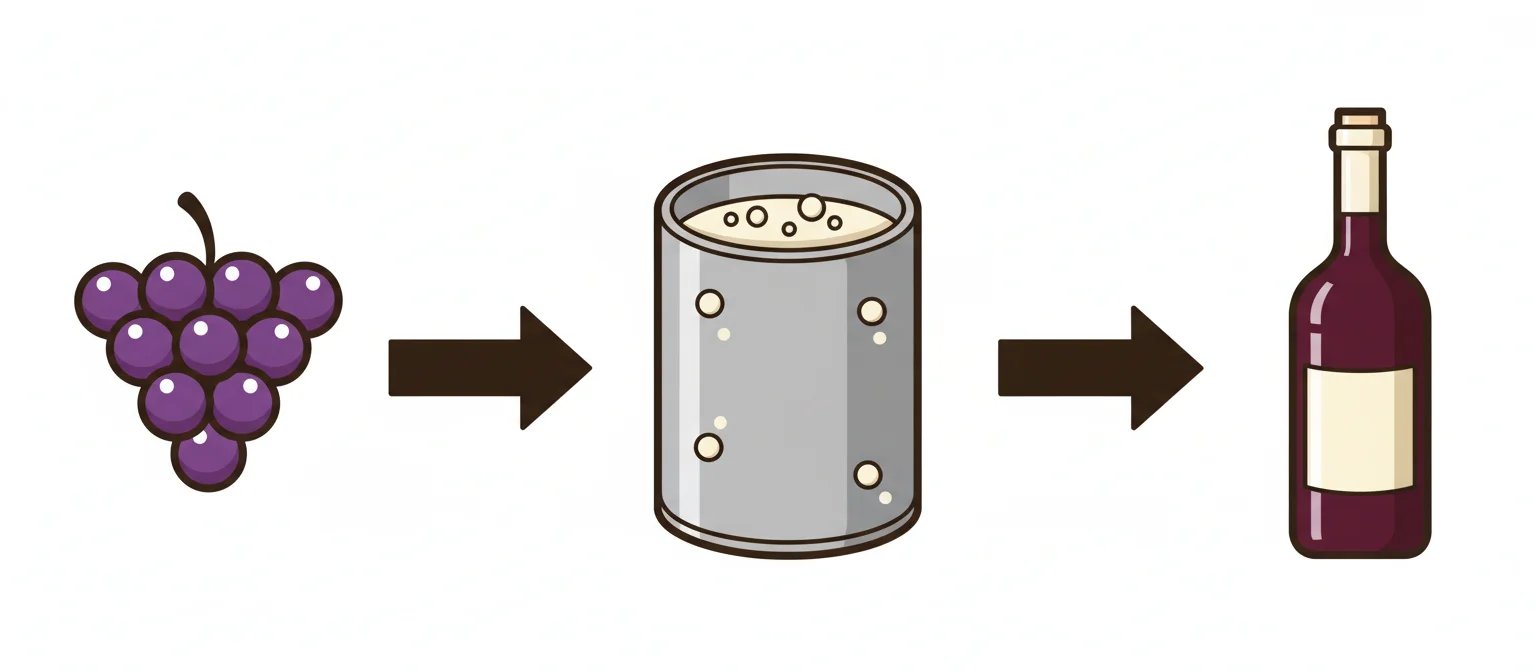
Crushing → alcoholic fermentation → draining → pressing → storage or maturation → packaging. Memorise that sequence in order. The fact that draining comes before pressing is a Level 2 trap: white wines are pressed before fermentation, reds are pressed after.
Extracting colour and tannin
The grape skins float to the top of the fermenting juice and form a thick layer called the cap. Left alone, the cap can't transfer much colour or tannin into the liquid below it. The skins have to be mixed thoroughly with the fermenting wine, and there are two common techniques.
- Punching down
- A plunger is used to push the cap down into the liquid. Traditional method, gives gentler extraction.
- Pumping over
- Liquid from the bottom of the fermentation vessel is pumped up through a hose and sprayed over the cap. More efficient at large scale.
Both achieve the same goal: keep the skins and the liquid in constant contact so colour and tannin can move from one to the other.
Fermentation temperature
Red wines are fermented at higher temperatures than whites. Red fermentation runs at 20°C to 32°C (68°F to 90°F). The heat does two jobs: it helps the yeast complete fermentation, and it actively assists the extraction of colour and tannin from the cap. White wines, which need no skin extraction, ferment cooler at 12°C to 22°C.
Winery vessels
Vessel choice shapes the finished wine almost as much as the grape variety. Split them into inert vessels and oak vessels.
- Stainless steel and concrete vessels
- Inert. Used for both fermentation and storage. They add no flavour to the wine and can be made airtight to prevent oxygen interaction. The right choice when the winemaker wants pure fruit character preserved.
- Oak vessels
- Add flavour, allow oxygen to interact with the wine during maturation, and soften tannins through that gentle oxygen exposure. The default for premium red wines.
New oak vs old oak
How much flavour an oak barrel imparts depends on whether it has been used before. New-oak barrels add a great deal of flavour: vanilla, coconut, charred wood, sweet spice. After two or three uses, an old-oak barrel has very little flavour left to give.
Toasting matters too. When a barrel is built, the oak staves are heated and bent into shape. Higher toast levels produce more sweet-spice and charred-wood character.
Smaller barrels add more flavour faster than larger ones, simply because more of the wine's surface area touches oak. Large oak vessels (vats) are rarely used to add oak flavour; they are mostly used for the slow oxygen exposure that softens tannins.
Oak alternatives
New oak barrels are expensive. To add oak character to less expensive wines, winemakers can use oak staves or oak chips dropped into a stainless steel tank. Cheaper, faster, and the wine still picks up vanilla and spice notes.
Blending
Blending happens at many stages of winemaking and serves three jobs: style, consistency, and complexity. A winemaker may blend wines from different grape varieties, vineyards, vintages, or barrels to define a particular style; to make a branded wine taste the same year after year despite vintage variation; or to add layers of flavour that no single component had on its own.
Maturation in bottle
Most wines are made to be drunk young. A small subset can improve with bottle age, but only if the wine has the right starting material. For a wine to age well in bottle it needs flavour concentration, flavours that can develop in a positive way, and high acid, tannin, or sugar to act as preservatives. Without those, age just dries out the fruit.
Section summary
- Red winemaking order: crush → ferment → drain → press → mature → bottle.
- The cap is the layer of skins at the top of the fermenter; punching down or pumping over keeps it mixed with the juice.
- Red fermentation runs at 20-32°C; white fermentation at 12-22°C.
- Stainless steel and concrete are inert vessels. Oak vessels add flavour and allow oxygen.
- New oak barrels add the most flavour; old oak (after 2-3 uses) adds very little.
- Blending serves three purposes: style, consistency, and complexity.
- Bottle ageing requires concentrated flavour plus the right preservatives (acid, tannin, or sugar).
That's the production toolkit. The next two sub-sections show how those choices play out for two specific grapes: Pinot Noir, the cool-climate Burgundian benchmark, and Zinfandel, the warm-climate Californian-Italian double act.
✓
Test yourself to continue
Red production factors